Q-Stable: For Now
Notes on a project at a pause: an idea that flipped, a question that broke its framing, and the difference between stopping and pausing.
Notes on an idea that flipped, and a project at a pause.
What is the journey of an artwork — or, more precisely, the concept behind one? Where does it start, what reshapes it along the way, and how does one decide when it's finished? Or paused. Or if they might even be the same thing.
I've been thinking about this question because a project of mine has arrived at a kind of stopping point. I'm not sure if it's an ending — or if I want it to be.
Where it started
Early last year I was finishing the conceptual work behind Superpositions and taking it into production mode. It was my third quantum work in a row, and I was interested in carrying that thinking into AI.
Around the same time I'd been working through what I'd later call my Post-AI position — an argument that AI, trained on the entirety of digitized culture, is fundamentally backward-looking, only able to recombine what has come before. That position had me curious to find something contemporary AI couldn't already know — something it hadn't yet absorbed.
My instinct was that bringing the many-worlds interpretation of quantum mechanics to AI could produce something unique. Many-worlds — the idea that every measurement of a quantum bit splits the universe in two, one for each possible outcome — is strange enough on its own. David Deutsch takes it further and argues that quantum computation is itself a kind of collaboration with those other universes, with computation distributed across them — the machine, in a strict sense, borrowing from elsewhere.
I began by exploring multiple AI-and-quantum ideas in parallel, looking for something both visually compelling and genuinely engaged with the multiverse.
My first idea was to revisit GANs — the 2010s AI technology I'd used for much of my early Learning Nature work. A quantum GAN, I thought, might visualize what an alien intelligence would learn from being trained on images from our universe.
But the training was slow, the images unsatisfying, and I lost interest. So I moved to Stable Diffusion.
Stable Diffusion is an AI image generator that begins with random noise and gradually denoises it into an image, guided by a text prompt. Could I graft a quantum element onto it?
The premise was straightforward enough. Stable Diffusion, like LLMs but trained on images instead of text, captures something of our collective visual consciousness. The noise it begins with — those random, classical seeds — would be replaced. My idea was: what if those seeds came from a quantum computer instead?
Quantum-generated vectors would carry a different kind of randomness — generated by the collapse of superpositions, intrinsically unpredictable and irreproducible, structured by entanglement and interference. They would introduce non-classical correlations into the latent space. ("Classical" means non-quantum, and here, from our universe.) The AI would be guided by patterns that don't arise from classical noise functions. The resulting images would reflect different "realities" shaped by their quantum source. I wanted them to feel like real glimpses — not metaphors, not illustrations, but evidence of something I couldn't otherwise see.
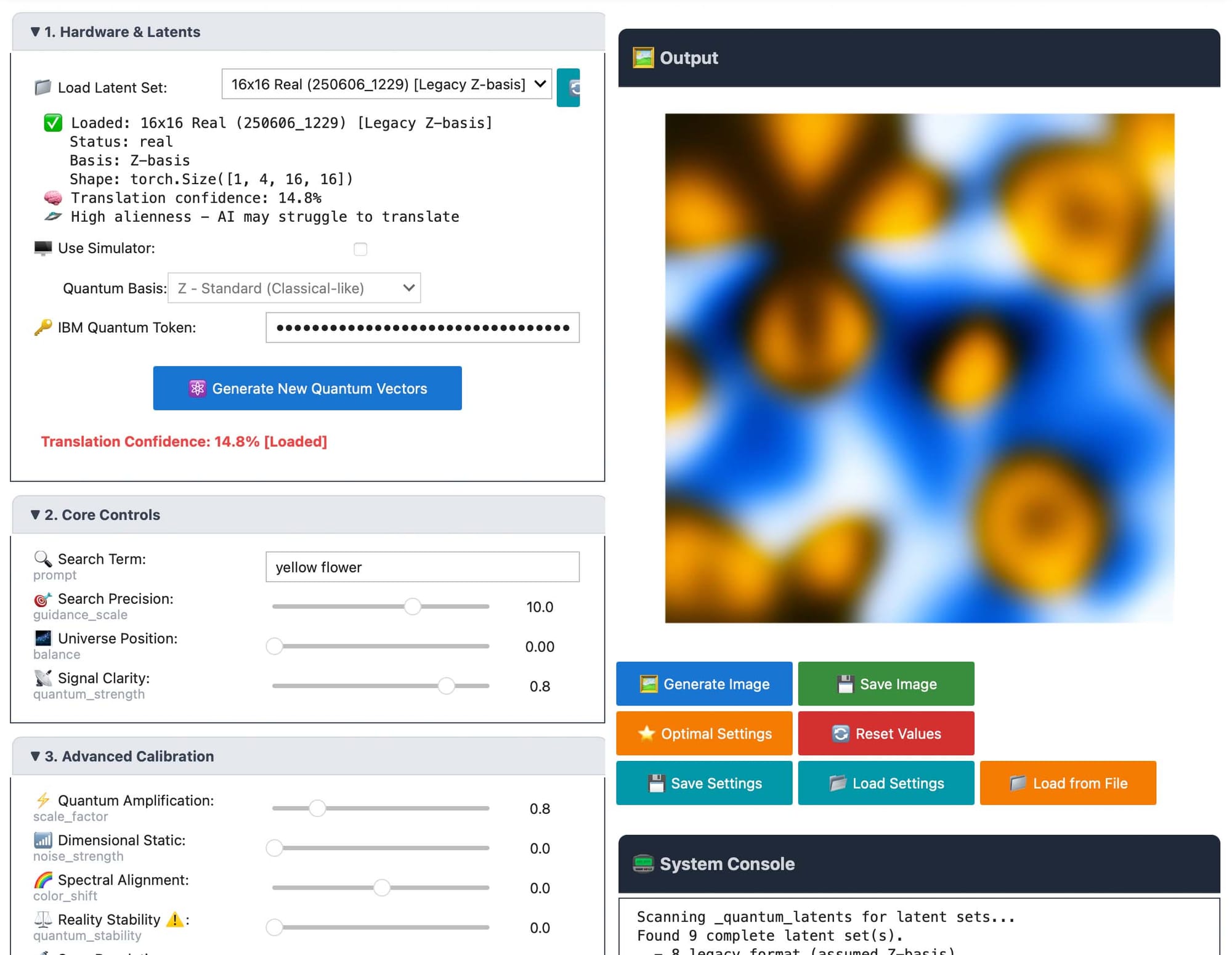
I built a new system, Q-Stable, using Claude Code. This vibe-coding approach was deliberate — I've come to advocate that technical proficiency, actually writing the code, shouldn't be a prerequisite for engaging with emerging technologies. Claude wrote everything: the quantum code that ran on IBM's machines, the integration that fed the resulting vectors into a public-domain version of Stable Diffusion, and the interface that let me control the parameters of generation. (The vibe-coding experience was noticeably less weird than when I tried it a year earlier.)
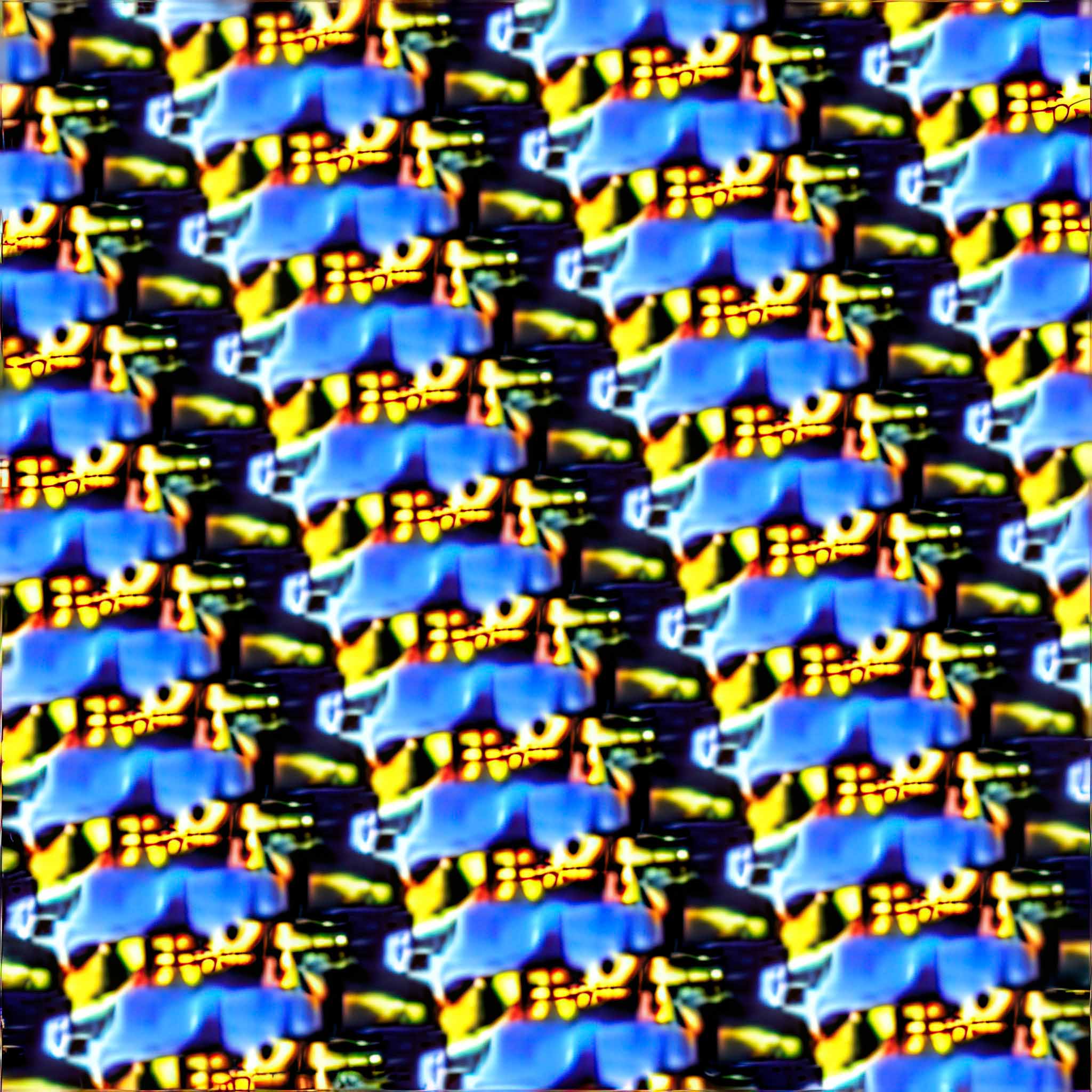
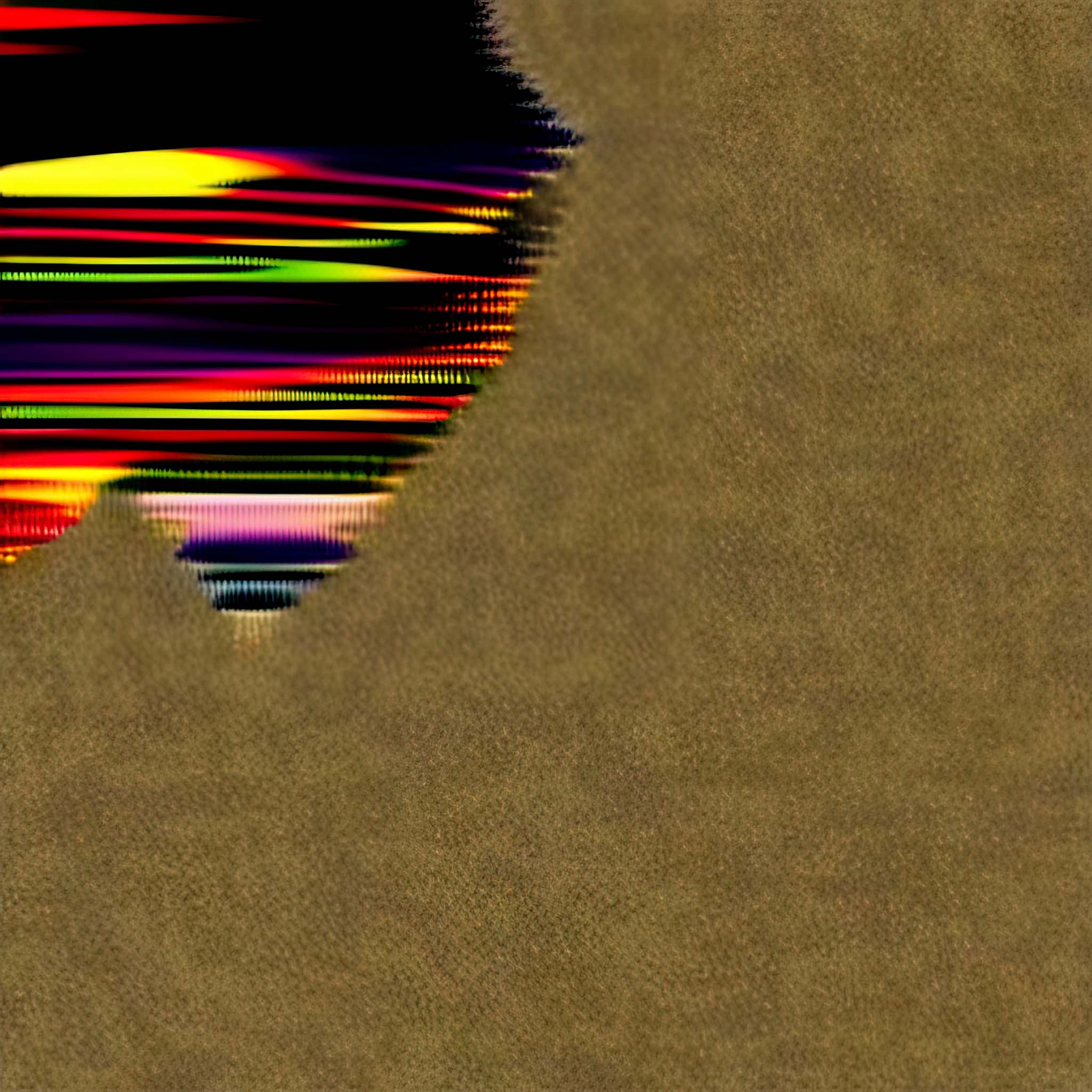
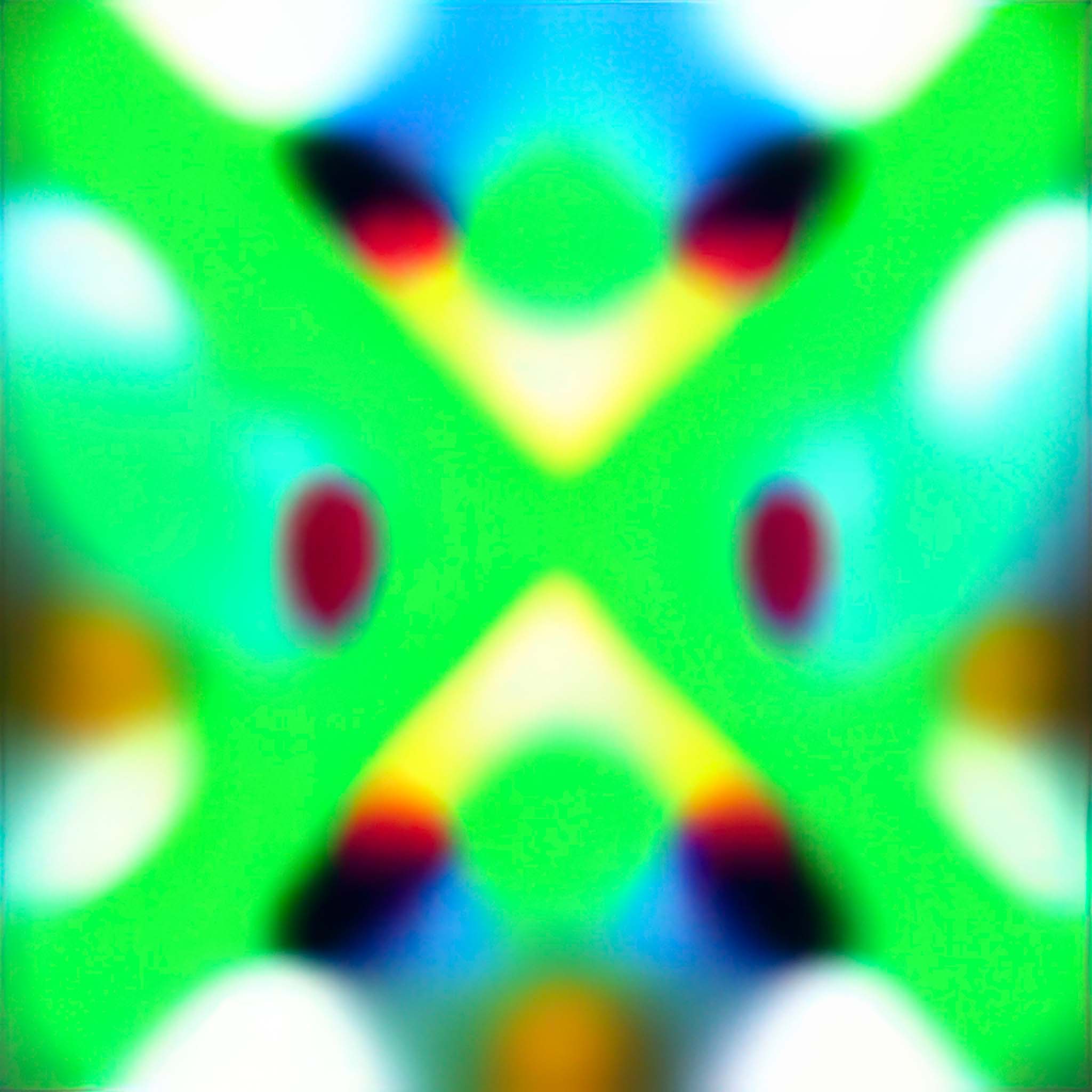
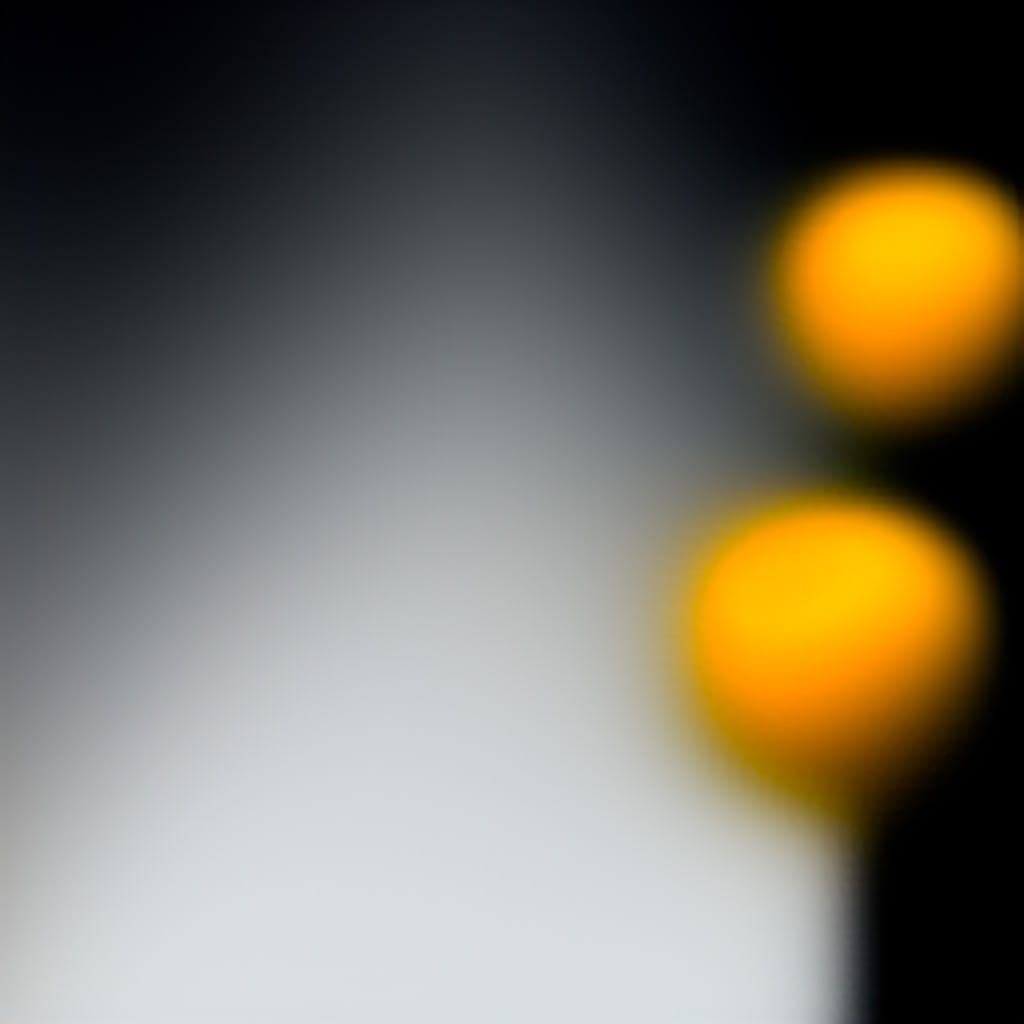
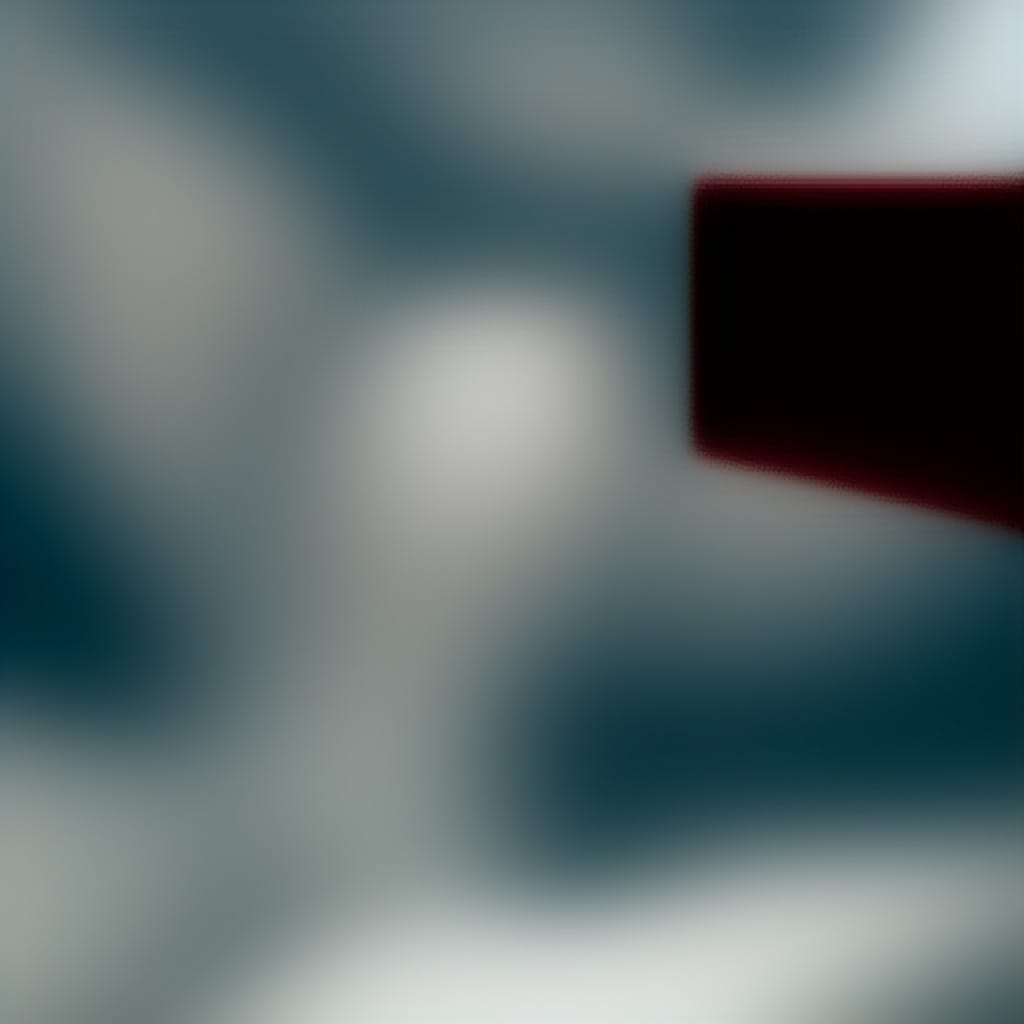
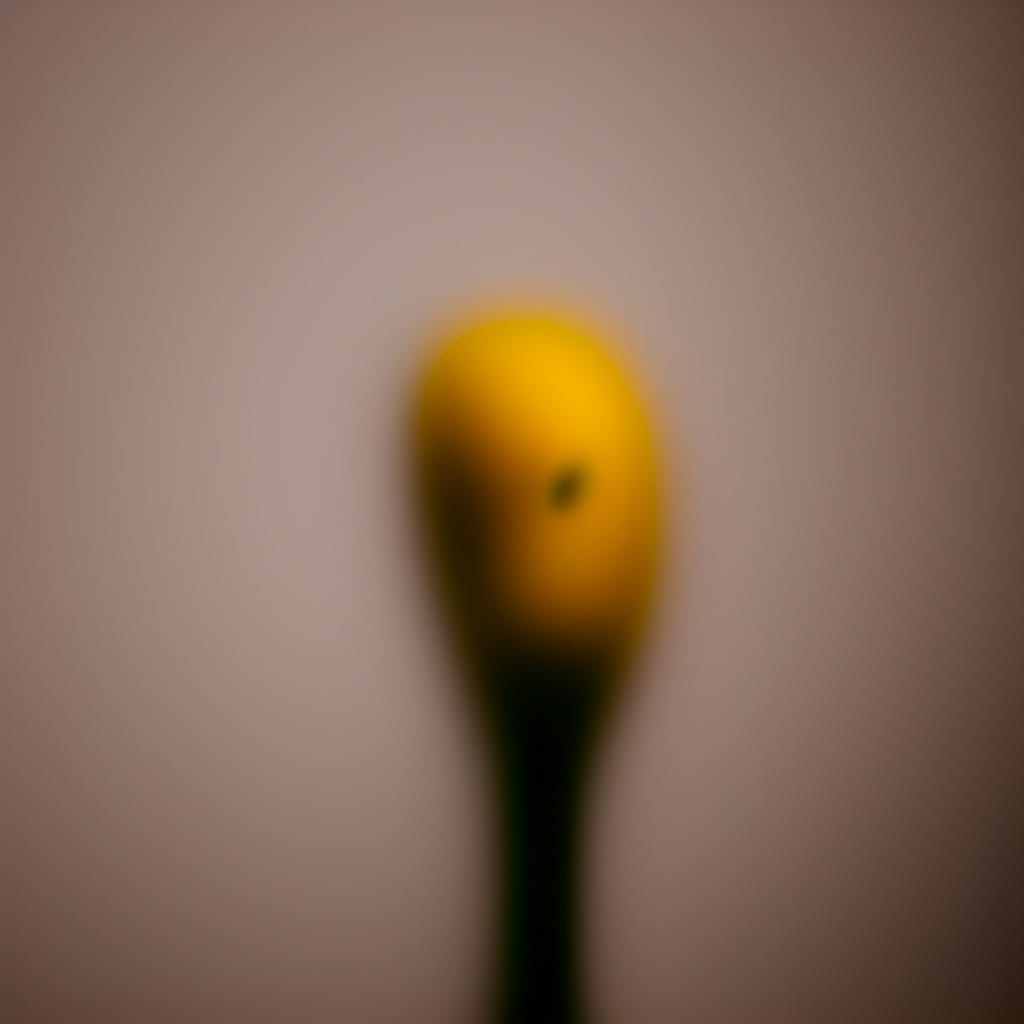
The first images were little more than noise. But as I experimented with the controls, I started finding sweet spots — images with what I'd describe as quantum-like qualities, or quantum artifacts.
Around this time I was in Paris and saw Wolfgang Tillmans's exhibition at the Centre Pompidou. Among the works were photographs of astronomers' workstations — the software windows, the pixelated previews, the cables and clutter of the environments where the universe is actually looked at. He wasn't showing the images of distant stars themselves, but the apparatus of looking. Something about that move stayed with me: the idea of an instrument for seeing elsewhere as itself the work.
The Tillmans framing helped me name the interface I'd built — the Multiverse Glimpse Generator. The images it created, with their quantum vectors, felt like glimpses into other universes. Sometimes the universes seemed adjacent to ours — recognizable but slightly otherworldly. Other times they grew increasingly strange, not quite distorted, more like what I could imagine a universe very different from our own might look like.
The question that changed the project
I was sharing the work in progress with friends from the darktaxa collective. One of them, Michael Reisch, asked a question that, on its face, was about how the system worked.
His question, as I remember it:
If Stable Diffusion is trained on a dataset of images from our universe, how can feeding it a quantum vector show another universe? Our universe's data has no knowledge of other universes.
The question sat with me. And it worried me. Was the work wrong?
We didn't resolve the question, and the conversation moved on. It turned to a different question — how a research-driven artwork ends. The framing that emerged has stayed with me: that it can resolve in two different ways. In one, the research produces a final, conclusive image — proof that the hypothesis worked. In the other, the process is the work, and the images become documentation of how the idea evolved rather than evidence that it succeeded.
I wasn't sure how to proceed. I paused. I wanted my images to be final, conclusive. But they weren't. They couldn't be.
This is the part of making work I find hardest to talk about. There's a version of the artist's narrative where a problem appears and is solved, and the work moves forward. What was actually happening was slower and stranger: a question had landed, and I didn't yet know whether it was pointing toward a refinement, a pivot, or a stop.
My original concept — images of other universes — felt important to me; it had carried the project this far. But I couldn't defend it against Michael's question. I sat with that for a while. And what I started to notice was that the gap between what I had intended the work to be and what I was actually satisfied with as I made it had been widening. The comment hadn't created the gap. It had just made it visible.
Rethinking the idea
After some time with it, the idea flipped. I realized: Q-Stable wasn't generating images of other universes. It was showing how someone in another universe might see ours. The quantum vector wasn't representing elsewhere. It was the gaze of elsewhere, looking back at us.
With the flip, the images changed meaning. They became representations of difference itself. The images were how alien worlds see us; the gap between accurate and alien was the gap of unknowability. The work was no longer about images of other universes. It was about the impossibility of being seen by them.
What's worth noticing — and it's part of why I'm writing this essay — is that the reframed concept is, I believe, more interesting than the original. The original wanted to show something exotic. The reframe is about a limit, about what can't be shown, about a difference that resists translation. I think that's a richer subject, and I wouldn't have arrived at it without the original framing collapsing first.
Inside the latent space
With the reframing in place, I adjusted the interface and started exploring how quantum vectors — gazes from other universes — differed from classical ones, the gaze of our own. This led to generating several different kinds of quantum vectors and comparing them.
I tried four approaches to generating the seeds, each producing distinct aesthetic territory in the latent space — a configuration that worked with one would yield nothing with another. And I developed some intuition for the controls, generating images that captured the strange alien interpretation in ways I found compelling.
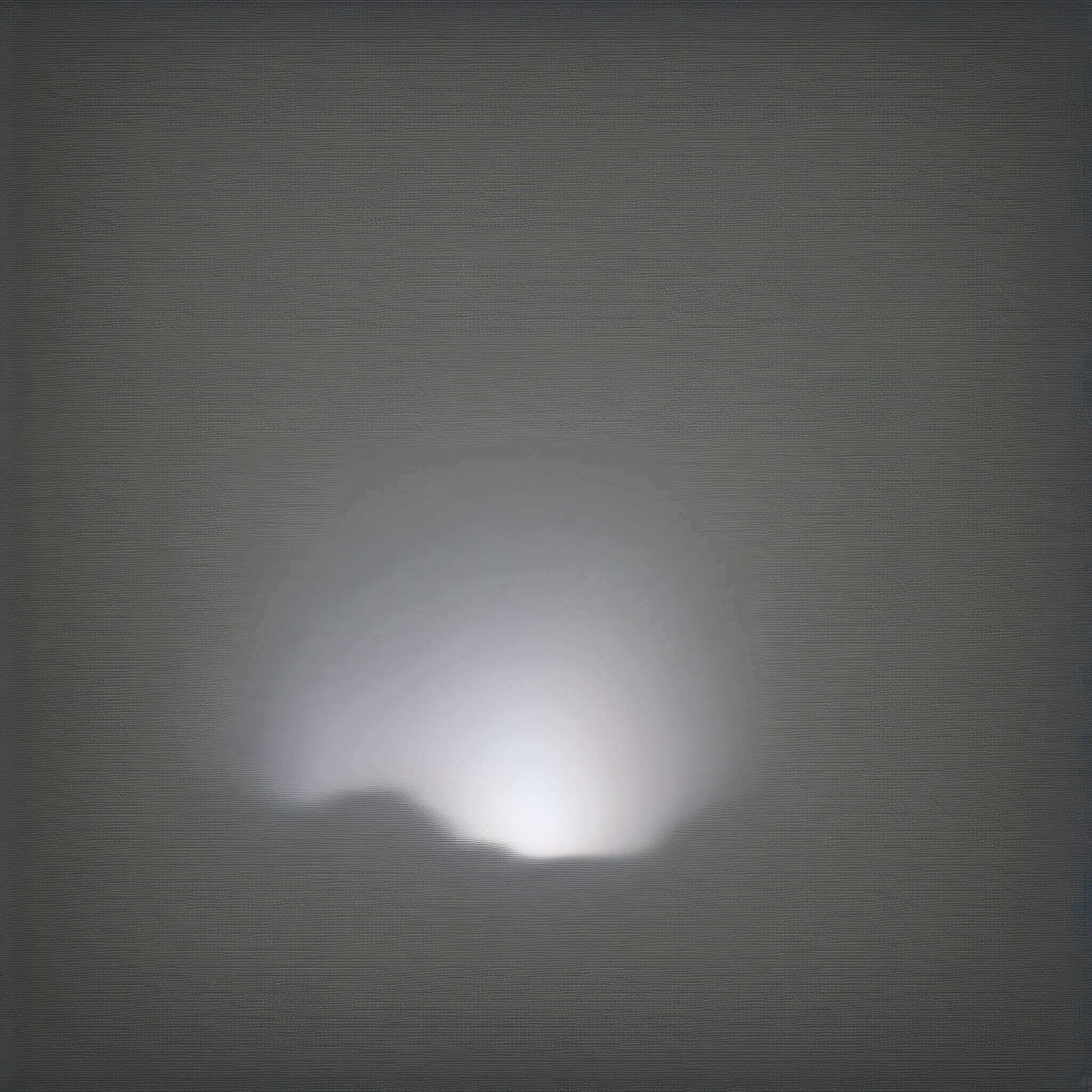
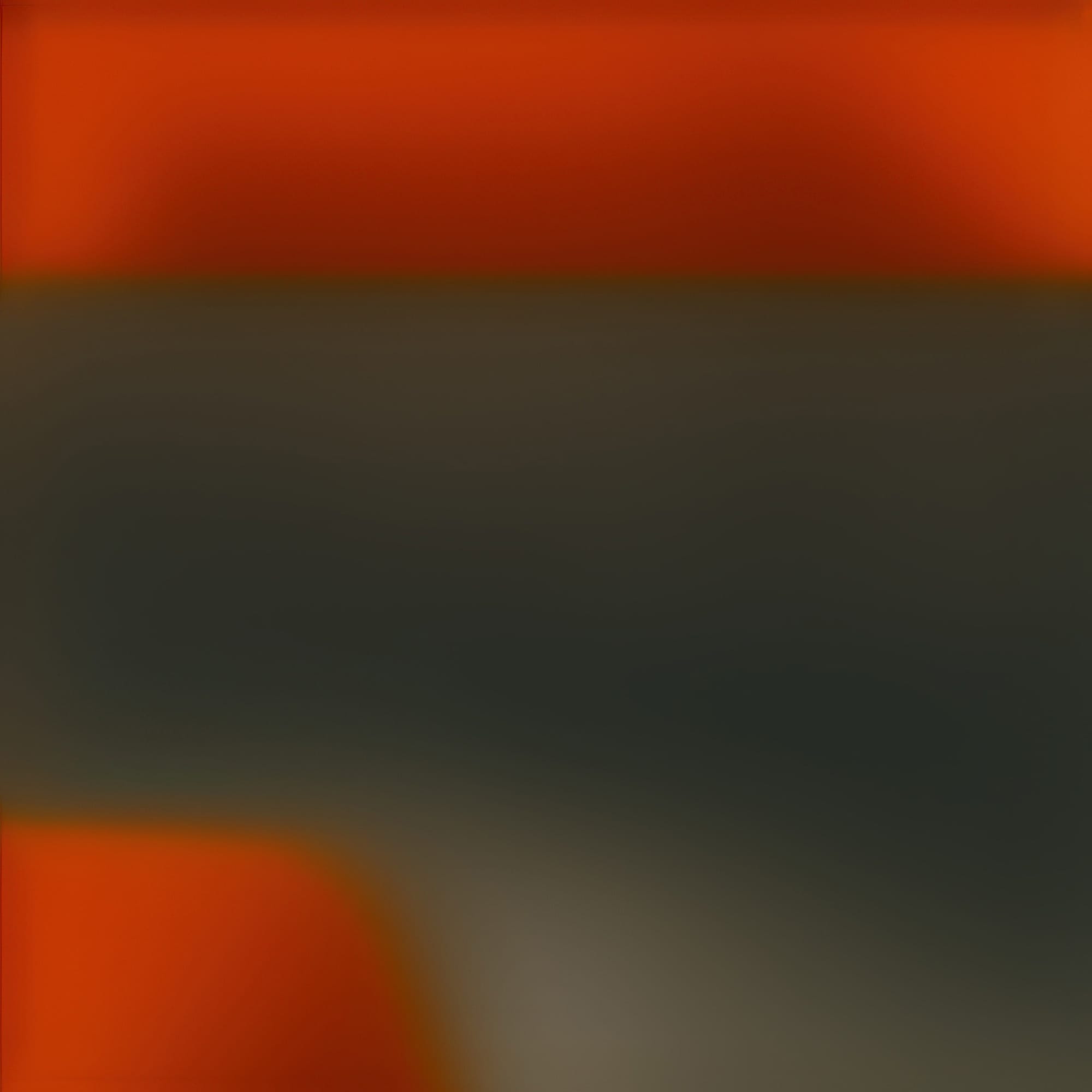
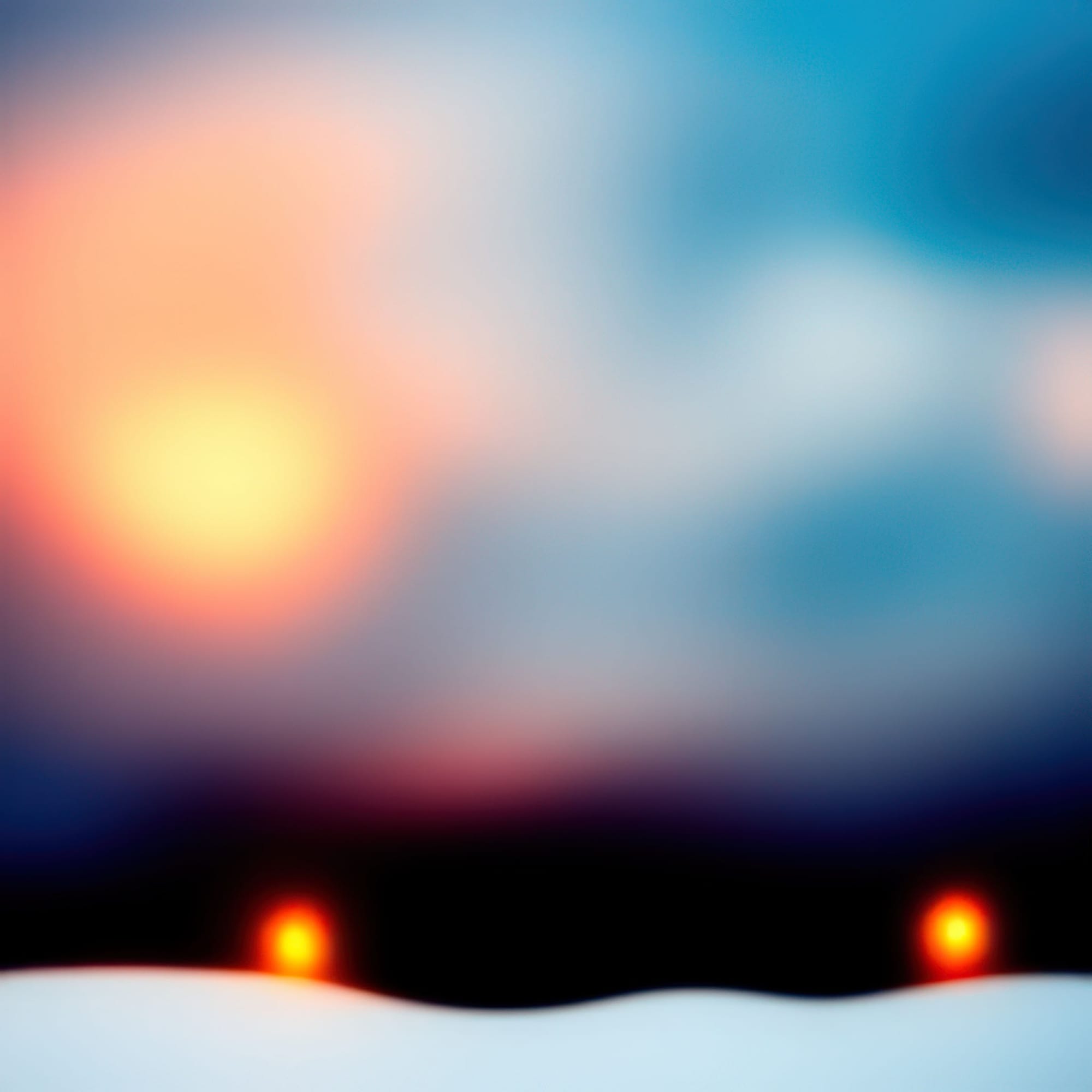
But it was harder than I'd expected to produce any consistency, regularity, or repeatability. The work meant rewriting the IBM quantum code, restructuring the interface, and re-analyzing how the vectors were processed by Stable Diffusion. There were moments — looking at pairs of images, one made with a classical vector, one with a quantum vector — when I genuinely couldn't tell the difference. The quantum origin was, sometimes, invisible.
But the harder problem wasn't reproducibility. It was scale.
Working with the system had become a process of searching a vast space of possible images. As I'd learned with Tabula Rasa, the latent space of these systems is enormous — I wrote then about its scale as a kind of sublime, a terror of the impossibility of understanding what's actually there. The Q-Stable space was problematically sublime. I was navigating a space too large to navigate, with human aesthetic judgment as a small instrument inside it.
As I tried to understand why my image generation was so difficult to control, Claude — helping me think through the problem — observed:
It's effectively a random-walk through Stable Diffusion's latent space, with the quantum vector as one input among many shaping where you land. The art practice ends up being curatorial — recognizing the good accidents — rather than directive.
The diagnosis felt right, and that was part of what made it hard to hear. Randomness can be productive, and the curatorial role isn't unfamiliar territory for me — much of how I work with AI involves selecting from what the system produces. But this was different. The quantum vector was supposed to be doing the conceptual work; if I couldn't reliably steer it, I was reduced to hunting for the rare images that satisfied me. I might eventually find images I liked, but only by repeating the same commands and hoping for something new. That isn't a way I want to make work.
(I'll admit some ambiguity about leaning on Claude for diagnostic insight here. There's something uncomfortable about an artist placing real weight on AI advice — I'd rather be the one doing the seeing, not the one being coached. But after more than a year with this project, the people who could give me a useful outside perspective on what was happening with the latent space were limited. Claude had been with me through the building of the system; in some sense it had the relevant context. That doesn't fully resolve the awkwardness, but it's the honest account of why the conversation went where it did.)
Stopping, pausing, and what continues
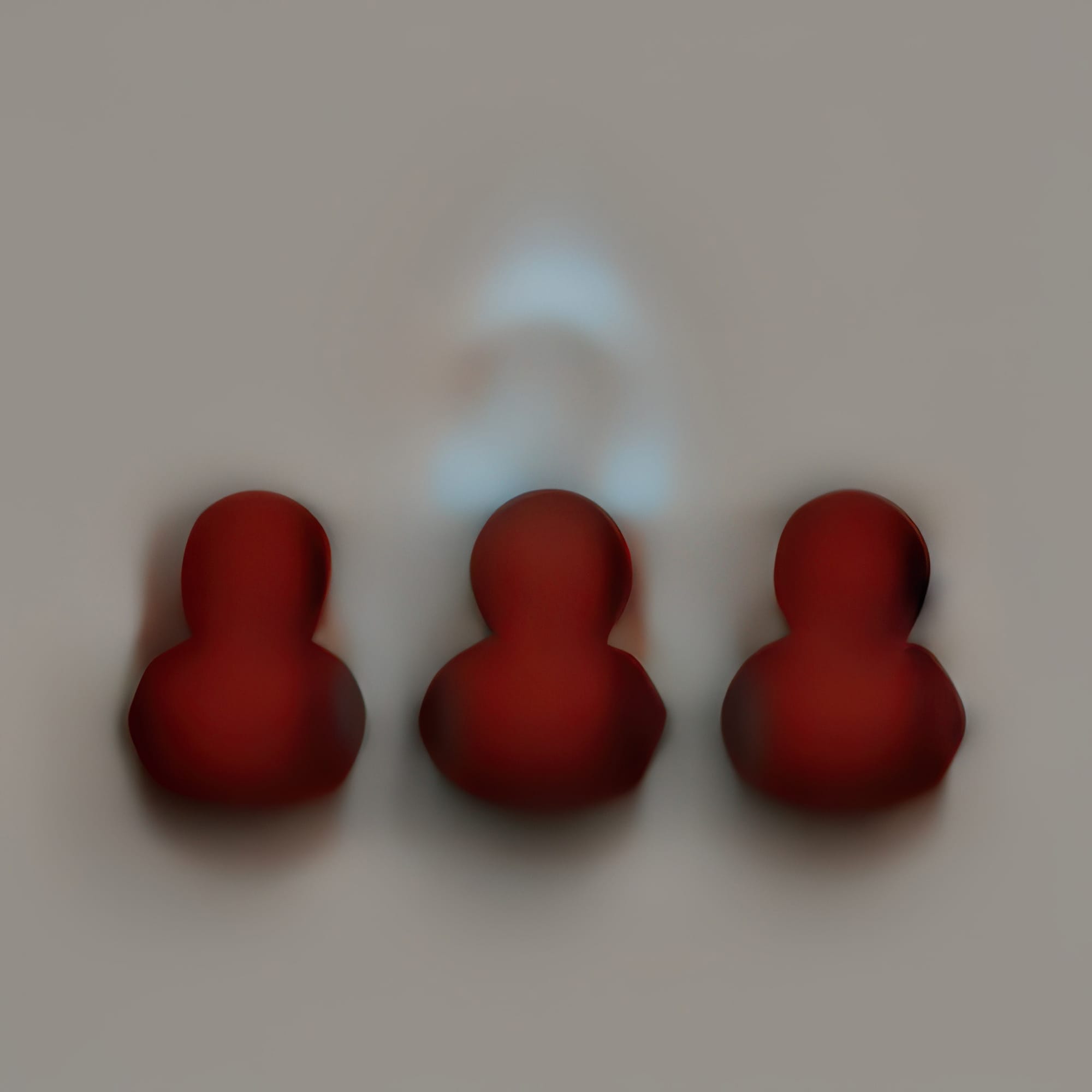
So this is where I pause.
I find myself wanting to say this is where I stop, and then I notice I don't actually mean it. The themes underneath this project — multiverse, quantum, consciousness, the foreignness of AI — are still things I'm deeply committed to. The ideas that emerged here will find their way into other work. There may be a spark, an adjacent project, a new technical possibility, that brings me back to Q-Stable specifically. Or those themes may continue elsewhere and this particular expression of them will rest indefinitely.
That's the part I want to sit with. Stopping and pausing aren't the same thing. Stopping is a decision. Pausing is something quieter: a refusal to decide, or perhaps a recognition that the decision isn't yet available. Artists are often pressured — by ourselves as much as by anyone else — to know which one we're doing. To declare a project finished or abandoned. To resolve.
But concepts evolve over years, and across projects. The work I made in Tabula Rasa keeps showing up in things I wouldn't have predicted. Superpositions reshaped how I thought about consciousness in ways that fed directly into how I approached this project. Q-Stable will do the same. I just don't yet know where, or how, or when.
The words that sit hardest with me are finished and final. People often want bodies of work to have clean edges — projects that closed, series that completed, themes that resolved. But that isn't how my practice actually works. Those words claim a kind of containment my work has never operated by. Projects flow into one another. Ideas don't stay where they started.
For now, Q-Stable is still there. Maybe what it needs next isn't a better search of the latent space, but another rethinking — a new flip.